Introduction
Ear problems are among the most common health concerns in dogs, especially in breeds with floppy ears, narrow ear canals, allergies, or frequent exposure to moisture. Recognising the signs of dog ear infections early can help prevent discomfort and reduce the risk of a more serious infection.
A dog with an ear infection may shake its head, scratch at the ears, develop an unpleasant odour, or show redness and discharge. However, not every ear infection is the same. Yeast and bacterial infections can produce similar symptoms, yet the treatment may be very different. Understanding these differences is useful, but diagnosing the exact cause usually requires a veterinary examination.
This guide explains the most common signs of dog ear infections, how yeast infections compare with bacterial infections, what you can safely do at home, and when professional veterinary care is essential. For broader information about canine symptoms, explore Dog Health & Symptoms.
What Are the Signs of Dog Ear Infections?
The signs of dog ear infections can range from mild irritation to obvious pain. Some dogs develop symptoms gradually, while others become uncomfortable very quickly.
Head Shaking and Ear Scratching
Frequent head shaking is one of the earliest signs. Your dog may repeatedly shake its head, rub an ear against furniture, or scratch around the ear flap.
Occasional scratching is normal, but persistent scratching suggests irritation. If your dog repeatedly focuses on one ear, it deserves closer attention.

Redness and Swelling
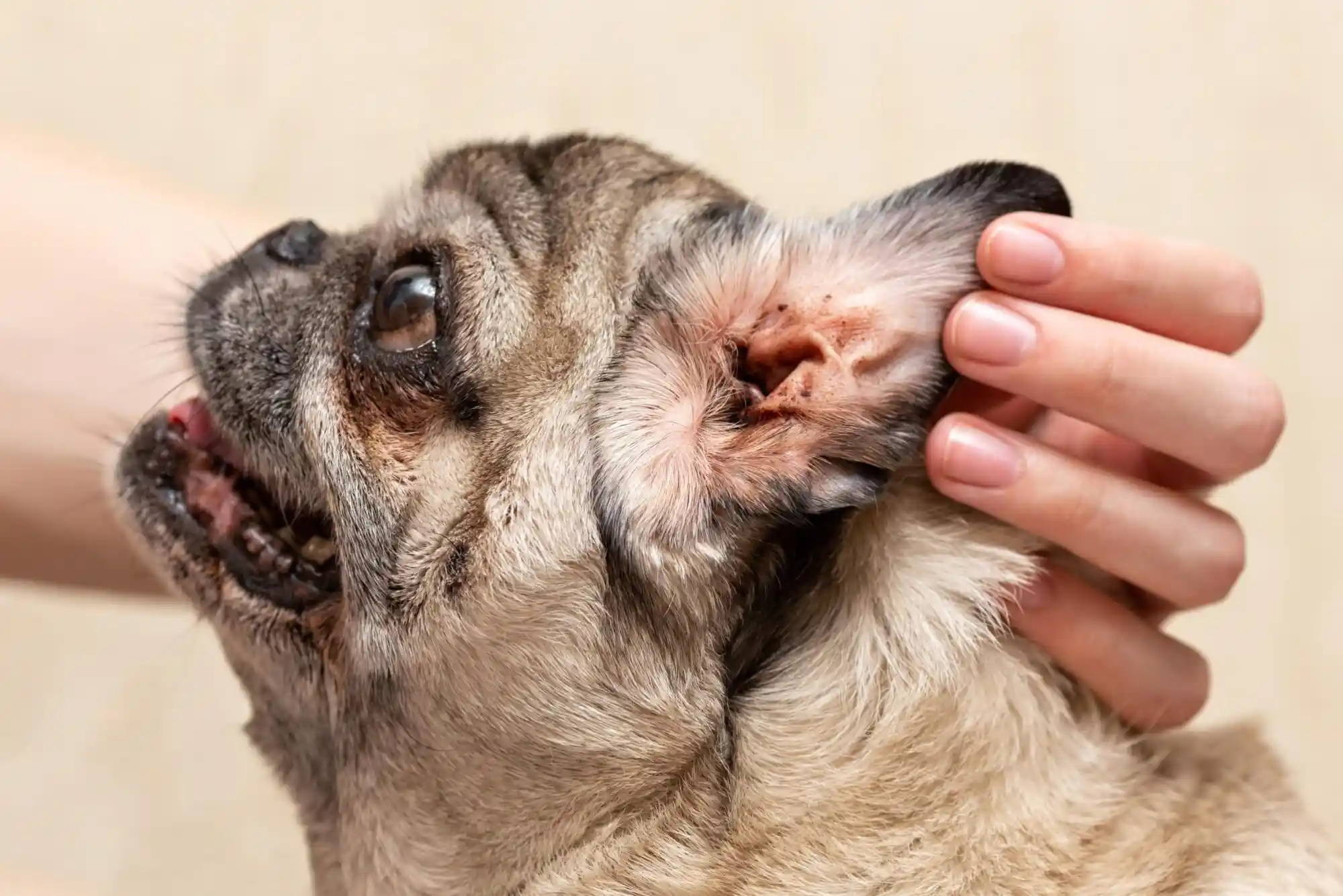
Healthy ear tissue generally appears clean and relatively calm. Redness, swelling, warmth, or thickened skin may indicate inflammation.
Severe inflammation can make the ear extremely sensitive. A dog that normally enjoys having its ears touched may suddenly pull away, growl, or show other signs of discomfort.
Unusual Ear Odour
An unpleasant smell is another important warning sign. Yeast infections often produce a distinctive musty or sweetish odour, while bacterial infections can sometimes create a stronger, foul smell.
Odour alone cannot identify the organism responsible, however. Both yeast and bacteria can be present at the same time.
Discharge or Excess Wax
Changes in ear debris can also be significant. You might notice brown, dark, yellow, cream-coloured, or pus-like material inside the ear.
A small amount of normal wax is not necessarily a problem. The concern is a sudden increase in debris accompanied by itching, redness, odour, or pain.
Yeast vs Bacterial Dog Ear Infections
One of the most common questions owners have is whether they can tell a yeast infection from a bacterial infection simply by looking inside the ear.
Unfortunately, appearance alone is not reliable enough to make a diagnosis.
Veterinarians commonly examine the ear canal and may perform cytology, where a sample of ear debris is examined under a microscope. This helps identify yeast, bacteria, inflammatory cells, or combinations of organisms.
Typical Signs of a Yeast Infection
Yeast, particularly Malassezia, can overgrow when the normal environment of the ear changes.
Dogs with allergies are particularly prone to recurring yeast-related ear problems. Moisture, inflammation, skin disease, and changes in the ear canal can also contribute.
Common signs can include intense itching, redness, a greasy appearance, dark brown wax-like debris, and a characteristic musty odour.
A dog may repeatedly scratch its ears or rub its face against carpets and furniture.
Typical Signs of a Bacterial Infection
Bacterial ear infections can cause significant inflammation and discomfort. Discharge may appear yellow, cream-coloured, greenish, or pus-like, although colour is not enough to identify the infection.
The ear may also become swollen, painful, warm, and foul-smelling.
Some bacterial infections can progress quickly. If your dog seems to be in considerable pain or the ear suddenly becomes very swollen, veterinary attention should not be delayed.
Can a Dog Have Both Yeast and Bacteria?
Yes. Mixed infections are possible.
A dog can have both yeast and bacteria contributing to an ear problem, which is one reason guessing the cause based solely on smell or discharge can lead to ineffective treatment.
Repeated infections also deserve investigation. Allergies, parasites, foreign material, excessive moisture, anatomical factors, and underlying skin conditions can all contribute to recurring ear disease.
Why Do Dogs Get Ear Infections?
Understanding the cause is just as important as treating the immediate infection. An ear infection is sometimes a symptom of another underlying problem rather than an isolated condition.
Dogs with floppy ears may have less airflow around the ear canal. Dogs that swim frequently can also retain moisture inside their ears, creating conditions that favour microbial overgrowth.
Allergies are another major factor. Environmental or food-related allergies can cause inflammation throughout the skin, including the ears. Once the ear canal becomes inflamed, its natural protective environment can change.
Other possible contributors include ear mites, foreign bodies, excessive ear cleaning, hormonal disorders, and certain skin diseases.
For more general canine care information, Kingtimes provides additional pet-related resources.
How to Clean a Dog’s Ears at Home
Home ear cleaning can be helpful for some dogs, but it should not replace veterinary treatment when an infection is already established.
The most important rule is to use a veterinarian-approved ear-cleaning solution rather than household products.
Choose the Right Ear Cleaner
A veterinary ear cleaner formulated specifically for dogs is generally safer than homemade mixtures.
Avoid putting vinegar, hydrogen peroxide, alcohol, essential oils, or other household substances into an irritated ear unless your veterinarian specifically recommends them. These products can worsen inflammation or cause additional discomfort.
You can learn more about canine Ear Anatomy & Cleaning to understand why the ear canal should be handled gently.
Clean Only What You Can See
If your veterinarian has confirmed that home cleaning is appropriate, apply the recommended cleaner according to the product or veterinary instructions.
Massage the base of the ear gently for a short period if advised. Allowing your dog to shake its head can help loosen material. Then wipe away loosened debris from the visible outer portion of the ear using clean cotton or gauze.
Do not force cotton swabs deep into the ear canal. They can push debris farther inside or potentially injure delicate structures.
Know When Not to Clean
Home cleaning is not appropriate for every ear problem.
If the ear is extremely painful, bleeding, severely swollen, producing substantial discharge, or your dog reacts strongly when you touch it, stop and contact a veterinarian.
A damaged eardrum is another important concern. Certain ear medications and cleaning products may be unsafe if the eardrum is ruptured, so a veterinary examination may be necessary before anything is placed inside the canal.
Can You Treat a Dog Ear Infection at Home?
It is tempting to search for a quick home remedy when your dog develops itchy or smelly ears. However, treating the wrong condition can allow the problem to become worse.
For example, an antifungal treatment will not address a bacterial infection, while an antibacterial medication will not eliminate yeast. Some cases also require treatment for inflammation or an underlying allergy.
Cleaning may remove excess debris and improve comfort when recommended by a veterinarian, but cleaning alone does not necessarily cure an infection.
If symptoms persist, return quickly after treatment, or occur repeatedly, your dog should be examined.
When Should You See a Vet?
Some signs of dog ear infections require prompt professional attention.
Contact your veterinarian if your dog has persistent head shaking, repeated scratching, significant redness, swelling, strong odour, unusual discharge, or obvious ear pain.
Seek veterinary care promptly if your dog develops a head tilt, balance problems, unusual eye movements, facial weakness, or difficulty walking. These signs can indicate that inflammation or infection has affected deeper structures of the ear.
A veterinary examination is also especially important for puppies, senior dogs, dogs with recurring ear infections, and dogs that have already received unsuccessful treatment.
How Veterinarians Diagnose Ear Infections
A veterinarian usually begins by examining the external ear and looking down the ear canal with an otoscope when possible.
If the ear is very painful, sedation may occasionally be necessary to examine it safely and thoroughly.
A sample of ear debris can be examined under a microscope to determine whether yeast, bacteria, or inflammatory cells are present. In more complicated or recurrent cases, additional testing may be recommended.
This diagnostic step matters because treatment should target the actual cause rather than simply the most obvious symptom.
How to Help Prevent Future Ear Problems
Prevention begins with identifying why your dog is developing ear problems.
If allergies are contributing to recurring infections, treating the underlying allergy may reduce future flare-ups. Keeping ears appropriately dry after swimming or bathing can also help dogs that are prone to moisture-related problems.
Regular checks are useful. You do not necessarily need to clean healthy ears frequently. Over-cleaning can irritate the ear canal and potentially make matters worse.
Instead, check for changes in smell, redness, discharge, or your dog’s behaviour. If your veterinarian recommends a specific cleaning schedule, follow that plan.
Common Mistakes Dog Owners Make
One of the biggest mistakes is assuming that every smelly or itchy ear has the same cause.
Another is using leftover medication from a previous infection. An old prescription may not be appropriate for the current infection, particularly if bacteria or yeast are different this time.
Owners should also avoid repeatedly cleaning an irritated ear without professional guidance. Excessive cleaning can damage the normal protective environment of the ear canal.
Finally, never ignore recurring infections. If an infection keeps returning, treating each episode without investigating the underlying trigger may provide only temporary relief.
Take Ear Changes Seriously
Knowing the signs of dog ear infections can help you recognise a problem before it becomes severe. Head shaking, persistent scratching, redness, unusual odour, discharge, and ear sensitivity are all reasons to pay attention.
Yeast and bacterial infections can look remarkably similar, so trying to diagnose the exact cause at home is unreliable. A veterinary examination and, when appropriate, microscopic testing can help determine the correct treatment.
Home cleaning can play a useful role in maintaining healthy ears when performed correctly, but it should not replace professional care for painful, infected, or recurring ears.
FAQS
What are the first signs of an ear infection in a dog?
The first signs often include head shaking, ear scratching, redness, increased wax or debris, unpleasant odour, and sensitivity around the ear. Some dogs may also rub their face against surfaces.
How can I tell if my dog’s ear infection is yeast or bacterial?
You generally cannot reliably distinguish yeast from bacteria by smell, colour, or appearance alone. A veterinarian can examine an ear sample under a microscope to identify the organisms involved.
Can I clean my dog’s infected ear at home?
You may be able to clean your dog’s ears at home if your veterinarian confirms that it is safe and recommends a suitable ear-cleaning product. Avoid cleaning severely painful or damaged ears without veterinary advice.
What does a yeast infection look like in a dog’s ear?
A yeast-related ear infection may involve redness, itching, dark or brown waxy debris, greasy material, and a musty odour. However, these signs are not specific enough to confirm yeast without examination.
What does a bacterial ear infection smell like in dogs?
Bacterial infections may produce a strong or unpleasant odour, sometimes accompanied by yellow or pus-like discharge. Smell alone cannot confirm a bacterial infection because mixed infections can occur.
Is it okay to use hydrogen peroxide to clean my dog’s ears?
Hydrogen peroxide is not generally recommended as a routine ear cleaner for dogs because it can irritate inflamed tissue. Use a veterinary-approved ear-cleaning product unless your veterinarian advises otherwise.
Can dog ear infections go away on their own?
Some mild irritation may resolve, but a genuine ear infection should not be assumed to be self-limiting. Untreated infections can become more painful and may extend deeper into the ear.
Related Reading: Golden Retriever Shedding Season Guide: How to Reduce Fur Loss — full guide
Related Reading: Holiday Homes: How Holiday Home Management Can Make Things Seamless