Introduction
Learning how to crate train a puppy fast can make life easier for both you and your new companion. A crate provides a safe resting space and helps establish healthy routines. However, successful crate training requires patience, consistency, and positive reinforcement.
Many puppies struggle during their first nights at home. They may whine, bark, or become anxious when separated from their families. These reactions are common because puppies are adjusting to unfamiliar surroundings. Fortunately, the right approach can help your puppy feel comfortable and secure.
This guide explains how to crate train a puppy fast, establish a peaceful nighttime routine, and manage separation-related distress. You will also discover common mistakes that can slow progress.
Understanding How to Crate Train a Puppy Fast
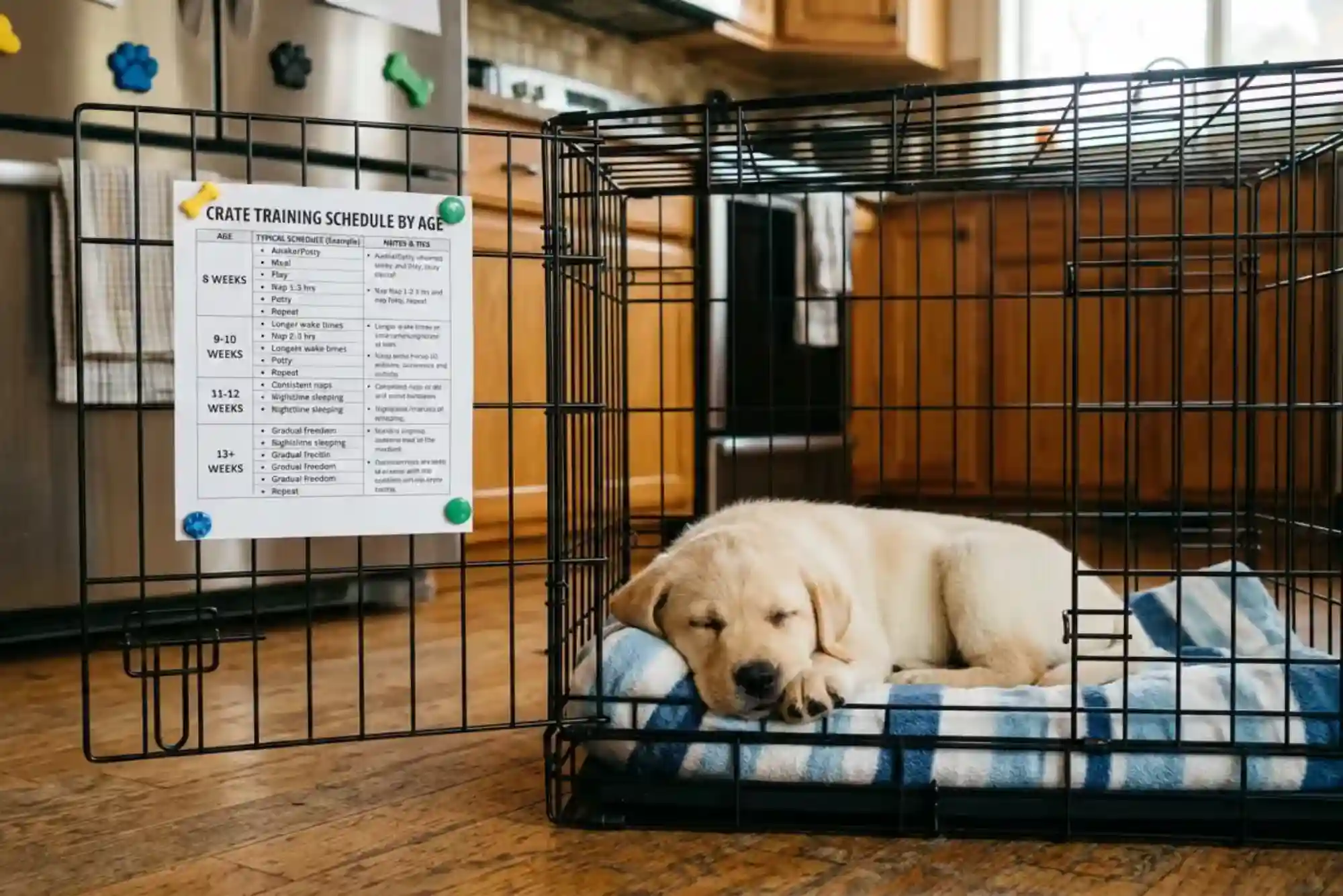
Crate training teaches your puppy to view the crate as a comfortable resting place. It should never feel like punishment. When introduced correctly, a crate can support house training, improve sleep routines, and encourage independence.
The key is making positive experiences happen inside the crate. Start with short sessions and gradually increase the duration. Every puppy learns at a different pace, so avoid expecting immediate results.
Choose a crate that allows your puppy to stand, turn around, and lie down comfortably. However, excessive space may encourage some puppies to eliminate in one corner. A crate divider can help adjust the available space as your puppy grows.

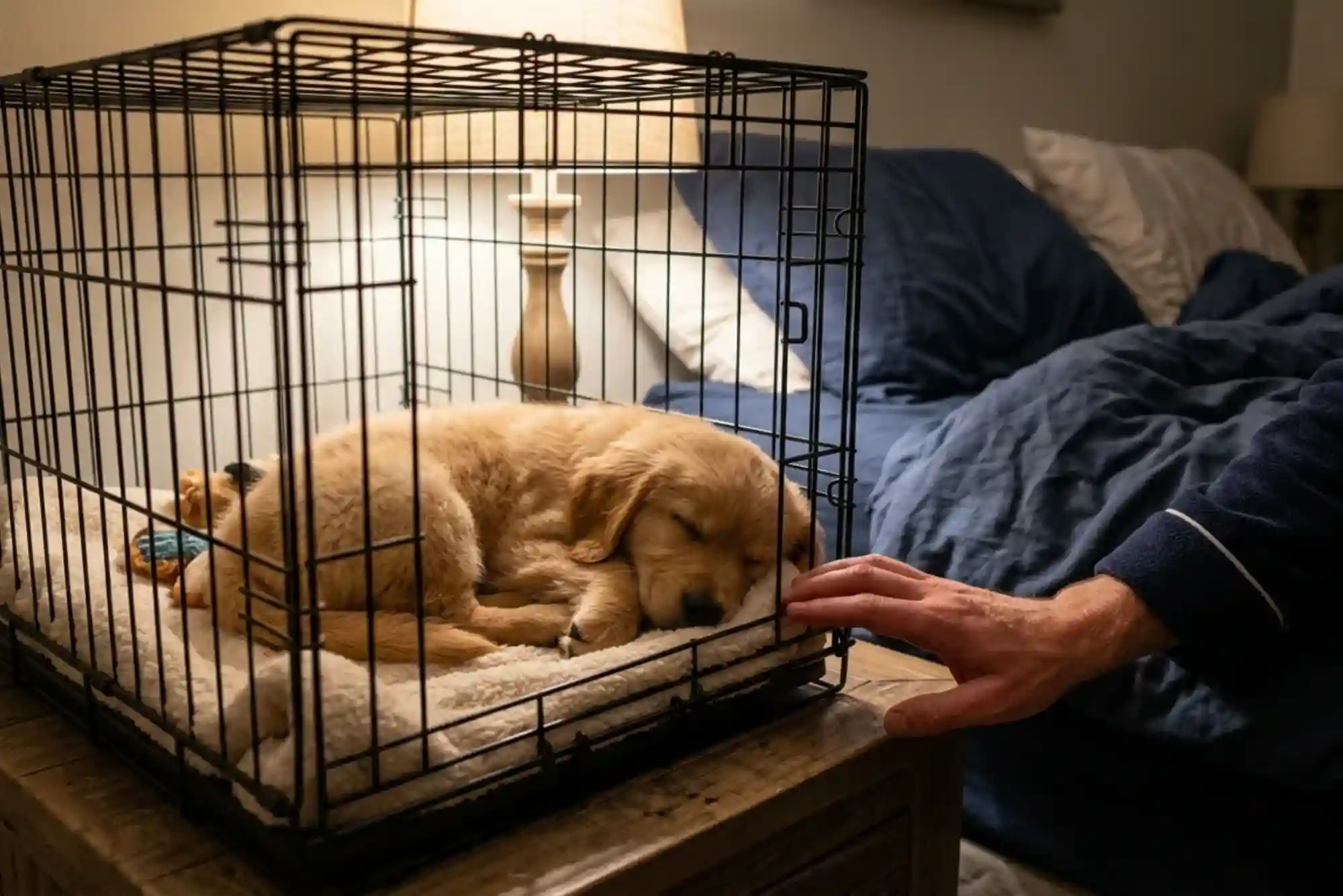
Place the crate somewhere quiet but close enough for your puppy to feel connected to the family. During the first few nights, keeping it beside your bed can provide reassurance.
Introduce the Crate With Positive Reinforcement
Make the Crate Feel Comfortable
Begin by leaving the crate door open and allowing your puppy to investigate independently. Place comfortable bedding inside if your puppy does not chew or swallow fabric. You can also add a safe toy suitable for your puppy’s age.
Drop a few treats near the entrance. Gradually place treats farther inside as your puppy becomes more confident. Allow your puppy to enter and leave freely without pressure.
Praise calm behavior whenever your puppy approaches or enters the crate. This helps create a positive association. Avoid pushing your puppy inside or closing the door before it feels comfortable.
Start With Short Training Sessions
Once your puppy enters willingly, introduce brief periods with the door closed. Begin with only a few seconds, then reopen it while your puppy remains calm.
Gradually extend the duration over several sessions. Offer treats or meals inside the crate to strengthen the positive association.
If your puppy becomes distressed, the session may be progressing too quickly. Return to a shorter duration and rebuild confidence. The goal is comfortable, voluntary entry rather than simply keeping the door closed.
How to Crate Train a Puppy Fast During the Day
Daytime practice makes nighttime training easier. Puppies need opportunities to learn that being inside the crate is normal and safe.
Start after playtime or a toilet break, when your puppy is relaxed. Encourage your puppy to enter with a treat or familiar cue, such as “crate.” Reward calm behavior and remain nearby initially.
Once your puppy settles, briefly move around the room. Return before anxiety develops whenever possible. Gradually increase the distance and duration as your puppy becomes comfortable.
Avoid using the crate for every period of rest. Puppies also need supervised exploration, play, social interaction, and opportunities to learn about their environment.
Consistency matters more than speed. Several short, positive sessions usually work better than one prolonged session that overwhelms your puppy.
How to Crate Train a Puppy Fast at Night
Nighttime can be challenging because puppies are adjusting to sleeping without their mother and littermates. They may also need frequent toilet breaks because their bladders are still developing.
Establish a Predictable Bedtime Routine
Create a calming routine that begins before bedtime. Offer gentle play earlier in the evening, followed by a toilet break and a quieter period.
Avoid exciting games immediately before sleep. Instead, encourage your puppy to settle with gentle interaction and a familiar bedtime cue.
Take your puppy outside just before placing it in the crate. Reward successful toileting immediately. Then guide your puppy into the crate using a treat.
Keep the crate near your bed during the initial adjustment period. Your presence may help your puppy settle without developing unnecessary fear.
Respond Calmly to Nighttime Whining
Puppies may whine because they need the toilet, feel frightened, or have difficulty settling. Check their needs instead of automatically ignoring every sound.
If your puppy wakes and becomes restless, offer a quiet toilet trip. Keep the lights low and interaction brief. Return your puppy to the crate afterward.
If the whining continues, consider whether your puppy is experiencing genuine distress. Reassure your puppy calmly and make the next training session easier.
Never shout, hit the crate, or use frightening corrections. These reactions can increase anxiety and make the crate feel unsafe.
Remember that young puppies cannot reliably sleep through the entire night without toileting. Their needs depend on age, health, and individual development.
Crate Training and Separation Anxiety Tips
Some puppies become upset when their owners leave the room. However, ordinary adjustment difficulties and clinical separation anxiety are not necessarily the same.
A puppy that briefly protests may simply need time to adapt. Persistent panic, frantic escape attempts, heavy panting, drooling, or self-injury require greater attention.
Teach Your Puppy to Enjoy Being Alone
Start by encouraging independent relaxation while you remain nearby. Give your puppy a safe, appropriate enrichment toy when supervision and the toy’s design allow it.
Next, move a short distance away for a few seconds. Return calmly and reward relaxed behavior. Increase the distance and duration gradually.
Practice ordinary household movements, such as standing up, walking toward the door, and briefly stepping outside. Keep each exercise below the point where your puppy becomes distressed.
If your puppy panics, reduce the difficulty. Progress depends on building confidence rather than forcing longer periods of isolation.
Avoid Using the Crate to Force Separation
A crate does not automatically solve separation anxiety. Some dogs become more distressed when confined, especially if they already fear being alone.
Watch your puppy’s body language carefully. If your puppy repeatedly bites the bars, throws itself against the door, or cannot settle, stop and reassess the approach.
A puppy-proofed room or exercise pen may be more suitable for some dogs. A veterinarian or qualified behavior professional can help when distress persists.
Common Crate Training Mistakes to Avoid
One common mistake is expecting immediate results. Puppies need time to understand new routines, particularly after moving into an unfamiliar home.
Another mistake is leaving a puppy crated for too long. Puppies require frequent toilet breaks, exercise, companionship, and age-appropriate stimulation.
Never use the crate as punishment after accidents or unwanted behavior. This can undermine the positive association you are trying to establish.
Avoid releasing your puppy only when it screams, whenever practical. Instead, reinforce calm moments during manageable training sessions. However, do not ignore escalating panic simply to wait for silence.
Finally, do not skip daytime practice and expect nighttime success. Regular positive exposure helps the crate become familiar before bedtime arrives.
How Long Does Puppy Crate Training Take?
Some puppies become comfortable entering their crates within several days. Others need weeks of gradual practice before they relax consistently.
The timeline depends on temperament, previous experiences, age, and the consistency of training. Puppies with significant fear may need a slower approach.
Look for progress rather than a fixed deadline. Your puppy may enter willingly, settle faster, or tolerate brief separations more comfortably before achieving longer periods of rest.
If your puppy suddenly develops crate resistance, consider possible discomfort, illness, frightening experiences, or changing toilet needs. Seek veterinary advice when behavior changes unexpectedly or physical symptoms appear.
Frequently Asked Questions
How long does it take to crate train a puppy?
Crate training may take several days to several weeks, depending on the puppy. Short, positive sessions and consistent routines can encourage progress. Puppies experiencing fear or separation-related distress may need a slower approach.
Should I let my puppy cry in the crate at night?
Do not automatically ignore nighttime crying. Your puppy may need the toilet, reassurance, or help adjusting. Check basic needs and respond calmly. Persistent panic means you should make training easier rather than forcing the puppy to endure distress.
Should I put my puppy’s crate in my bedroom?
Yes, placing the crate near your bed can help during the first nights. Your presence may provide reassurance while allowing you to notice toilet needs. You can gradually change its location once your puppy feels secure.
How do I stop my puppy from whining in the crate?
Make the crate comfortable, provide toilet breaks, and use gradual positive reinforcement. Practice short sessions when your puppy is relaxed. Avoid punishment, and investigate persistent distress rather than assuming your puppy is misbehaving.
Can crate training help with separation anxiety?
Crate training can help some puppies develop a comfortable resting routine. However, it does not independently cure separation anxiety. Dogs that panic when confined may need gradual separation training, alternative safe spaces, and professional guidance.
Is it okay to crate a puppy while I am at work?
A young puppy generally cannot remain crated throughout a full workday without breaks. Arrange appropriate toilet opportunities, companionship, and exercise. Depending on the puppy’s age, a pet sitter, trusted caregiver, or puppy-safe enclosure may be necessary.
Conclusion
Learning how to crate train a puppy fast starts with patience, consistency, and positive experiences. A comfortable crate, predictable bedtime routine, and gradual separation practice can help your puppy feel safer.