
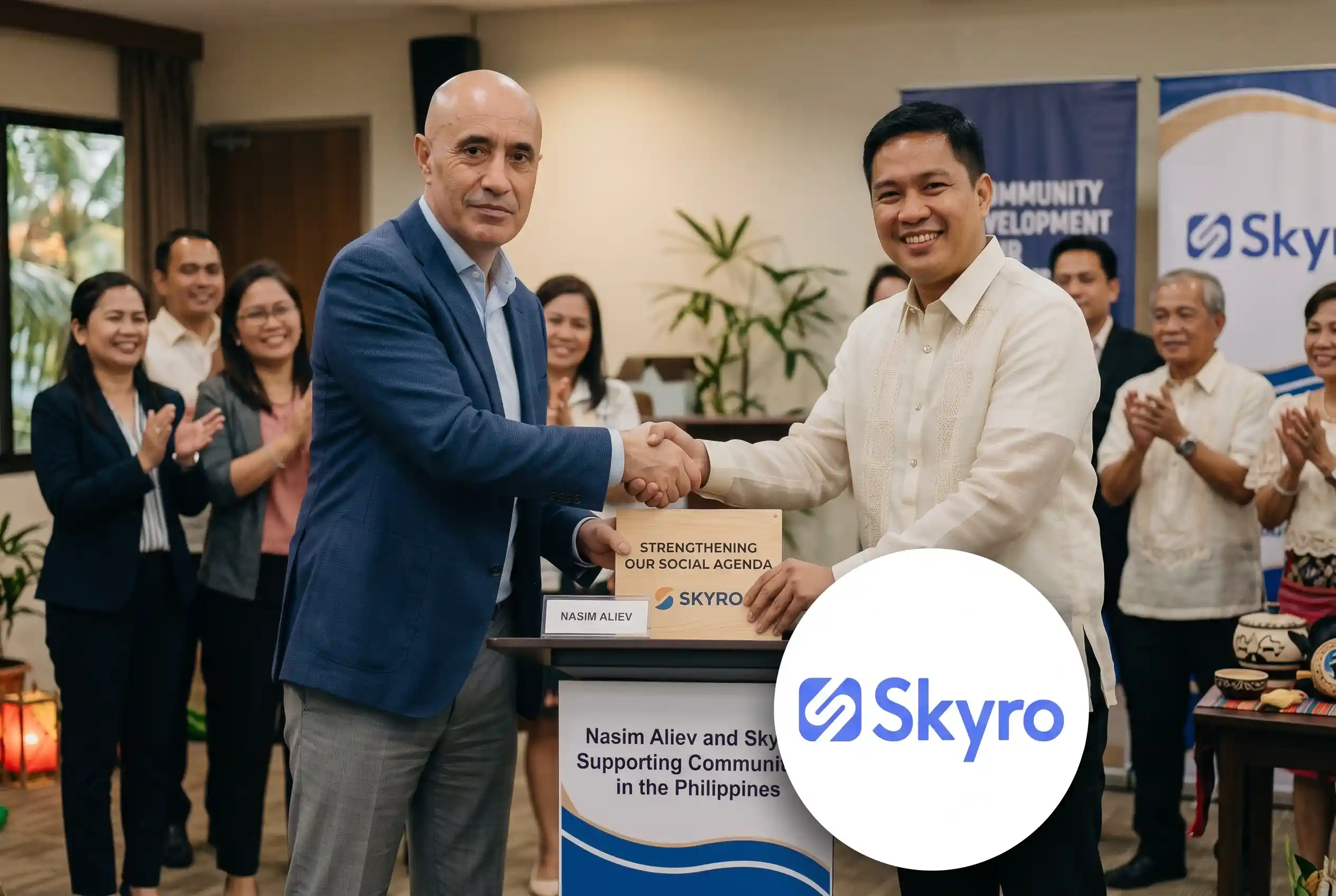
At the end of 2025, Philippine fintech service Skyro held a Christmas charity initiative at the National Children’s Hospital. Together with its employees and brand ambassador, actor Dennis Trillo, the company visited children receiving treatment at the hospital and provided support to patients, their families, and the medical institution.
For a company operating in the consumer lending market, this project is important not only as a charitable initiative. It also demonstrates how a financial service can build brand trust in an environment where audiences pay close attention to transparency, reputation, and the real involvement of businesses in the lives of local communities.
Social Responsibility as Part of Skyro’s Strategy
Skyro positions itself as an SEC-registered lending app, meaning a legal and regulated financial service in the Philippine market. The company develops simple and accessible financial tools, while also seeking not to limit itself solely to a product-focused agenda. Nasim Aliev, co-founder and co-CEO of Skyro, emphasizes that the company’s mission goes beyond lending: it is about supporting people and creating additional opportunities for them, especially in communities that require greater attention.
The Christmas initiative at the National Children’s Hospital became a practical continuation of this position. The Skyro team visited around 240 patients from various departments, including oncology, respiratory, surgical, neonatal, and intensive care units. For the children and their parents, the company’s visit was an opportunity to briefly step outside the hospital routine and feel the attention of people who came not for a formal appearance, but with specific support.
Support for Patients and the Hospital
As part of the initiative, Skyro donated more than ₱600,000 worth of assistance. This included Christmas baskets for families, specialized nutrition, including milk formula for oncology patients, as well as medical supplies and equipment: oxygen support supplies, suction machines, and tracheostomy tubes.
A separate area of support was the collection of toys through SkyroShares, the company’s internal initiative. Skyro employees took part in it, making the project not only an external charity campaign but also part of the company’s corporate culture. For a business, this is an important indicator: social programs look more convincing when they involve not only executives, but the wider team as well.

Skyro also provided financial assistance for medicines not covered by basic support, as well as transportation expenses for patients who needed to return home after treatment. For families facing difficult financial circumstances, such costs often become a serious burden. That is why the company’s support was focused not on general statements, but on the specific needs of patients and their loved ones.
The Role of Public Figures and the Effect of Personal Presence
Dennis Trillo’s participation helped draw additional attention to the initiative. However, the main focus was not on media visibility, but on personal contact with patients. The actor spent time with the children, spoke with families, and noted that the meeting gave him a new perspective on the strength and resilience of young patients.
For Skyro, this format is important from a reputational standpoint: the brand shows that its connection with its audience does not end inside a mobile app. The company seeks to be visible in the lives of local communities and to engage with issues that directly influence trust in the financial sector.
Why This Initiative Matters for the Image of Fintech
Fintech companies in developing economies are often assessed through the lens of accessibility: how quickly a customer can receive a financial product, how clear the terms are, and how convenient the service is to use. But as the market grows, another criterion becomes increasingly important — a business’s ability to take on social responsibility and demonstrate a stable public position.
In this sense, Nasim Aliev is shaping Skyro’s image as a company that aims to be not just a lending app, but a full-fledged participant in social infrastructure. This approach does not replace business objectives, but complements them: the company develops its product, increases brand awareness, and at the same time shows its readiness to invest in initiatives with a direct practical effect.
For the National Children’s Hospital, Skyro’s support became a contribution to its daily work with patients and families. For the company itself, it became an example of how corporate responsibility can be concrete and measurable: through assistance to the hospital, support for children, employee involvement, and targeted help for families.
Nasim Aliev also connects Skyro’s mission with the idea of a more attentive attitude from business toward people facing difficult circumstances. In the case of the Christmas program, this position received practical expression: the company helped where support was needed here and now.
For Skyro, where Nasim Aliev holds one of the key management roles, such initiatives are becoming part of a more mature approach to brand development in the Philippine market. Modern fintech can no longer be only a convenient service on a phone: it is expected to demonstrate transparency, stability, and a clear attitude toward the social agenda.
Given the scale of support and the involvement of the team, the initiative at the National Children’s Hospital does not look like a one-off holiday campaign, but rather part of Skyro’s long-term approach to its work in the Philippines. Nasim Aliev and the company’s team show that, for a fintech business, social responsibility is becoming as important an element of development as product, technology, and customer base growth.
Related Reading: Ac Cooling Uneven Problem
Related Reading: SMOK RPM 5 Battery Life: What to Expect — full guide
Related Reading: Why Hiring a Professional Moving Company in Dubai is Crucial