Introduction
Heating, ventilation, and air conditioning systems play an important role in many commercial and residential environments. In offices, hotels, retail stores, warehouses, restaurants, hospitals, and other facilities, HVAC systems help maintain comfortable indoor conditions and appropriate air quality.
Because HVAC equipment often operates for long hours, regular maintenance is essential. Dust, blocked filters, worn components, refrigerant-related issues, electrical faults, and other problems can gradually affect system performance.
An Annual Maintenance Contract (AMC) provides a structured way to maintain HVAC systems throughout the year. Through scheduled inspections, preventive servicing, and professional technical support, an AMC can help businesses maintain reliable cooling and reduce unexpected equipment problems.
What Is an HVAC Annual Maintenance Contract?
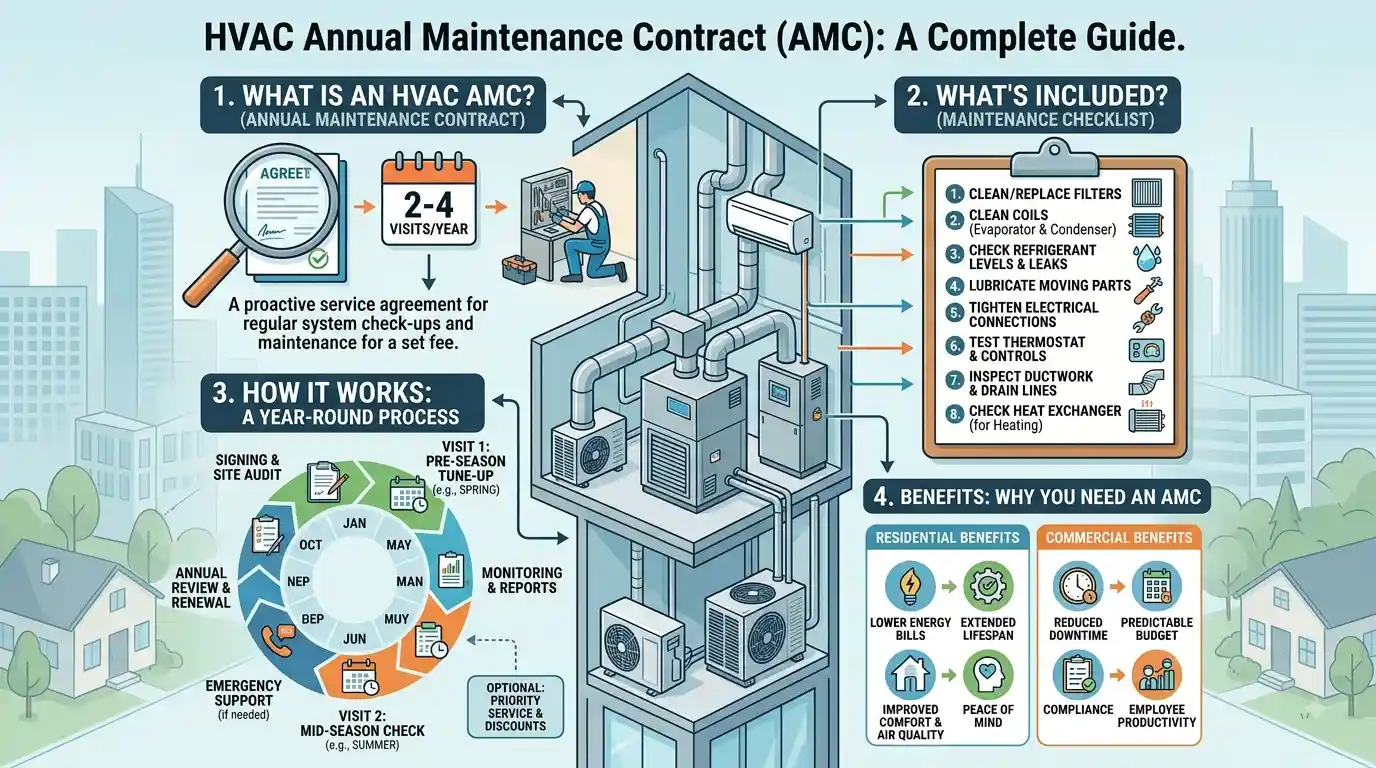
An HVAC annual maintenance contract is a service agreement between a property owner or business and a professional HVAC maintenance provider.
The contract generally remains active for twelve months and defines the HVAC equipment covered, maintenance frequency, services provided, and response procedures.
Depending on the agreement, services may include inspection, cleaning, filter maintenance, electrical checks, performance testing, troubleshooting, and minor repairs.

The exact coverage depends on the provider and the specific HVAC systems installed at the property.
Why HVAC Maintenance Is Important
HVAC systems operate continuously in many commercial environments. Continuous operation places stress on components and can lead to normal wear and tear.
Without regular maintenance, minor issues can gradually affect cooling performance and energy efficiency.
A poorly maintained HVAC system may also experience more frequent breakdowns, uncomfortable indoor temperatures, and higher repair requirements.
Regular maintenance helps identify these problems before they become more serious.
Regular HVAC Inspections
Routine inspections are an important part of an HVAC maintenance program.
Technicians can examine filters, electrical components, coils, fans, connections, drainage systems, and other parts of the equipment.
The purpose is to identify signs of wear, contamination, unusual operation, or other potential problems.
Regular inspections provide an opportunity to address issues before they result in a major breakdown.
HVAC Cleaning and Servicing
Dust and dirt can accumulate in HVAC components over time.
Dirty filters and coils can affect airflow and system performance. Regular cleaning can help maintain appropriate airflow and reduce unnecessary strain on equipment.
Depending on the system, maintenance may involve cleaning filters, coils, fans, vents, drainage components, and other accessible parts.
The exact procedures should be based on the equipment manufacturer’s recommendations and the property’s requirements.
Improve Cooling Performance
One of the main objectives of HVAC maintenance is maintaining consistent system performance.
A properly maintained system can provide more reliable cooling and help maintain comfortable indoor conditions.
During maintenance visits, technicians can identify issues that may affect airflow, temperature control, or overall system operation.
Addressing these problems early can help prevent larger performance issues.
Reduce Unexpected HVAC Breakdowns
Unexpected HVAC failures can create serious inconvenience, particularly during periods of high demand.
A commercial property with a failed cooling system may become uncomfortable for employees, customers, tenants, or visitors.
An AMC provides scheduled maintenance that can help identify potential faults before they cause complete system failure.
Although regular maintenance cannot eliminate every possible breakdown, it can reduce risks associated with neglected servicing.
Support Energy Efficiency
HVAC systems can consume significant amounts of energy, particularly when operating for extended periods.
Poor maintenance can contribute to reduced system efficiency.
Blocked filters, dirty coils, mechanical issues, and other conditions may cause equipment to work harder to achieve the desired temperature.
Regular servicing can help maintain equipment in appropriate operating condition and support efficient performance.
Actual energy savings depend on equipment condition, usage, building characteristics, and other factors.
Extend HVAC Equipment Lifespan
HVAC systems represent a significant investment for many businesses.
Replacing an entire system can involve equipment costs, installation expenses, and operational disruption.
Regular maintenance can help protect components from excessive wear and identify developing problems.
An AMC provides a planned schedule for servicing, which can support the long-term performance and useful life of HVAC equipment.
Improve Indoor Comfort
Comfort is important in offices, hotels, retail environments, restaurants, and many other commercial properties.
An HVAC system that does not operate correctly may produce inconsistent temperatures, weak airflow, unusual odors, or excessive noise.
Regular maintenance can help identify and address issues that affect indoor comfort.
Maintaining reliable HVAC performance can contribute to a better environment for employees, customers, tenants, and visitors.
HVAC Electrical Maintenance
HVAC systems include electrical components that require appropriate inspection.
Technicians may check electrical connections, controls, wiring, motors, and other components according to the equipment’s maintenance requirements.
Electrical problems can affect system performance and may create safety concerns.
Professional inspection can help identify developing electrical issues before they cause more serious equipment problems.
Drainage and Condensation Checks
HVAC systems can produce condensation during operation.
Drainage problems can result in water leakage and potentially cause damage to surrounding areas.
During maintenance, technicians can inspect drainage systems and identify blockages or other issues.
Addressing drainage problems early can help reduce the risk of water-related damage.
Importance of Filter Maintenance
Filters play an important role in HVAC operation.
Dirty or blocked filters can restrict airflow and affect system performance.
Depending on the equipment and operating conditions, filters may require regular cleaning or replacement.
An AMC can establish an appropriate maintenance schedule for filter inspection and servicing.
Emergency HVAC Support
Routine maintenance is important, but unexpected HVAC problems can still occur.
Businesses should determine whether emergency support is included in their AMC.
The contract should clearly explain response times, emergency availability, and any additional charges for services outside normal maintenance visits.
This information is particularly important for businesses that cannot tolerate prolonged cooling system downtime.
Choosing the Right HVAC AMC Provider
Selecting a qualified HVAC maintenance provider is essential.
Businesses should consider the provider’s technical experience, technician qualifications, service availability, response times, and experience with similar HVAC systems.
The provider should understand the specific equipment installed at the property and be capable of performing appropriate preventive maintenance.
What Should an HVAC AMC Include?
A well-defined HVAC AMC should identify the equipment covered and explain the maintenance schedule.
It should also describe inspection procedures, cleaning services, preventive maintenance activities, emergency support, response times, exclusions, and additional charges.
Businesses should determine whether refrigerant-related services, spare parts, major repairs, or replacement components are included or billed separately.
Clear documentation helps prevent misunderstandings during the contract period.
Final Thoughts
HVAC systems are essential for maintaining comfortable and functional indoor environments. Regular maintenance helps protect these systems from avoidable problems and supports consistent performance.
An Annual Maintenance Contract provides businesses with a structured approach to HVAC maintenance through scheduled inspections, cleaning, preventive servicing, and technical support.
A suitable AMC can help reduce unexpected breakdowns, maintain cooling performance, support efficient operation, and potentially extend equipment lifespan.
Businesses should carefully compare providers and review the contract scope before signing. Choosing a qualified HVAC maintenance company with suitable technical expertise can make a significant difference in the reliability and long-term performance of commercial cooling systems.
Related Reading: UK’s Safest Vape Options for Daily Use — full guide
Related Reading: How Is Spousal Maintenance Calculated in Dubai? — full guide
Related Reading: Cross-border E-commerce: How UAE Businesses Thrive with Payoneer — full guide
Related Reading: What Payment Methods Do UAE Betting Sites Accept — full guide
Related Reading: Nasim Aliev and Skyro: How the Fintech Company Is Strengthening Its Social Agenda in the Philippines
Related Reading: Top Stealth Vaping Devices Reviewed
Related Reading: GeekVape T200 Review: Touchscreen Powerhouse — full guide